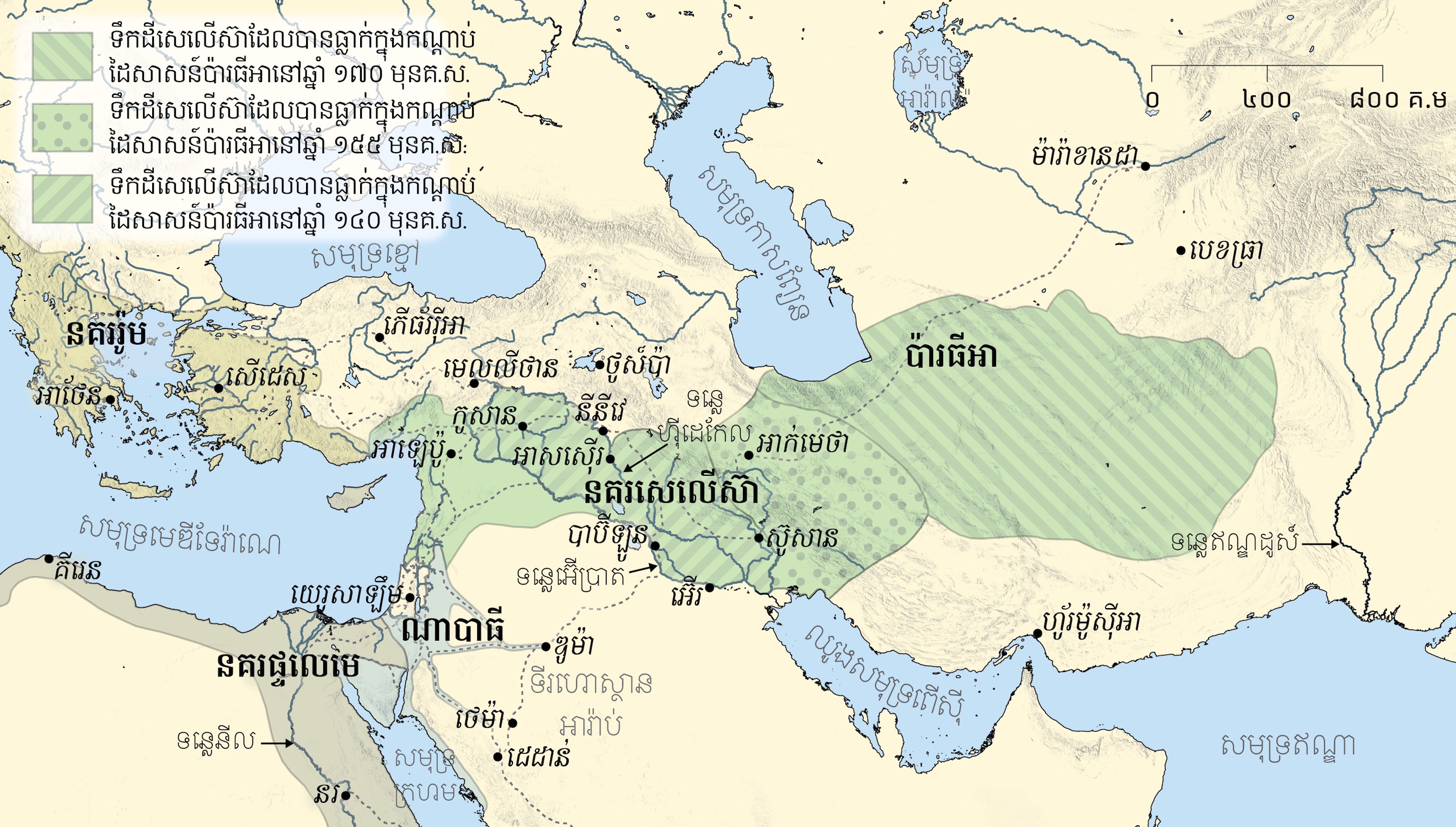
នគរផ្ដូលឡិមី និងនគរសេលើស៊ា (នៅចុង)
The Empires of the Ptolemies and the Seleucids (Late)
ការពិពណ៌នា
ប្រមាណអំឡុងឆ្នាំ ១៩៨-១៣៣ មុនគ.ស. នៅសតវត្សទី២ មុនគ.ស. នគរសេលើស៊ាចាប់ផ្ដើមបាត់បង់អំណាចក្នុងការគ្រប់គ្រងទឹកដីខ្លួន ហើយអាណាចក្ររ៉ូមចាប់ផ្ដើមកាន់កាប់អំណាចនៅជុំវិញសមុទ្រមេឌីទែរ៉ាណេយ៉ាងរហ័ស។ ដើម្បីព្យាយាមបង្កើតការរួបរួមក្នុងនគររបស់គាត់ ក៏ដូចជាការពារខ្លួនពីសម្ពាធជុំវិញ លោក អន់ទីយូគូស ទី៤ អេពីផាន (Antiochus IV Epiphanes) បានដាក់ច្បាប់មួយយ៉ាងតឹងរឹងថា ទឹកដីដែលគាត់ត្រួតត្រាត្រូវតែរៀនភាសាក្រិក និងត្រាប់តាមប្រពៃណីសាសន៍ក្រិក ដែលរួមមានទាំងទឹកដីសាសន៍អ៊ីស្រាអែលផងដែរ។ សាសន៍យូដាជាច្រើនស្អប់ច្បាប់នេះ ដែលសូម្បីតែគ្រួសារម៉ាកាបាយ (Maccabees) (ដែលពេលខ្លះគេហៅថា អាសមូនេអាំង (Hasmonean)) ហើយនៅឆ្នាំ ១៦៧ មុនគ.ស. ពូជគាត់បានដឹកនាំការបះបោរ ហើយបានបង្កើតនគរឯករាជ្យថ្មីមួយសម្រាប់សាសន៍អ៊ីស្រាអែល។
Description
c. 198–133 B.C. By the second century B.C., the Seleucid Empire was losing its grip on much of its territory, and the Roman Empire was rapidly expanding throughout the Mediterranean world. In an attempt to unite his empire and shore up his defenses against these pressures, Antiochus IV Epiphanes imposed a strict policy of hellenization over his domain, which now included the land of Israel. His policy proved too abhorrent for many Jews, including the Maccabean (also called Hasmonean) family, and in 167 B.C. they led a revolt that established a new, independent kingdom of Israel.