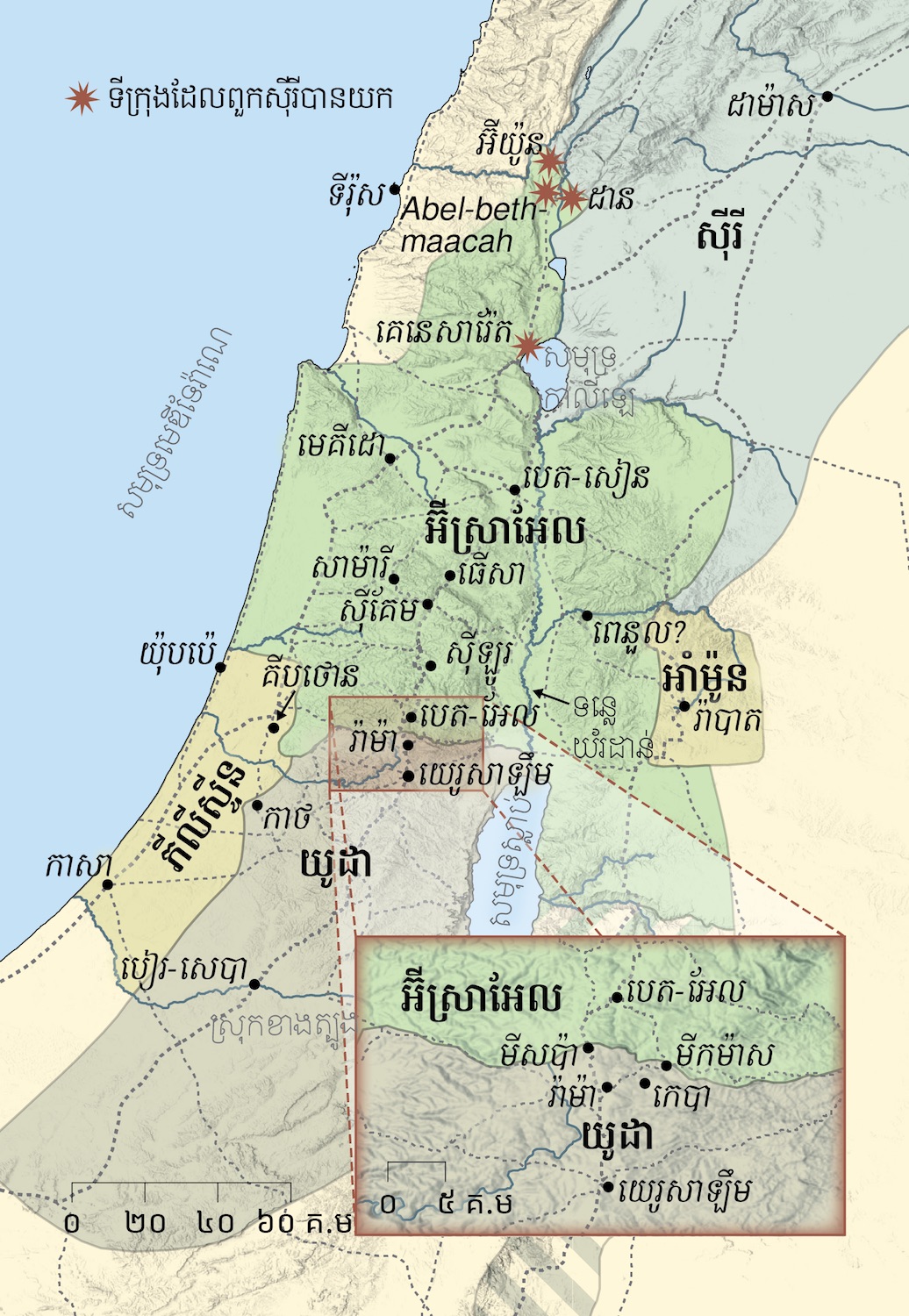
សង្គ្រាមរវាងសាសន៍អ៊ីស្រាអែល និងសាសន៍យូដា
War between Israel and Judah
ការពិពណ៌នា
ឆ្នាំ ៨៩៥ មុនគ.ស. (១ពង្សាវតារក្សត្រ ១៥:១៦-២២; ២របាក្សត្រ ១៦:១-៦) ខណៈពេលដែលសាសន៍អ៊ីស្រាអែល និងសាសន៍យូដាកំពុងធ្វើសង្គ្រាម ដើម្បីវែកញែកព្រំដែនឲ្យបានដាច់ស្រេចពីគ្នា ពេលនោះស្ដេច ប្អាសា នៃសាសន៍អ៊ីស្រាអែលបានរើព្រំដែនចុះទៅរ៉ាម៉ា ដើម្បីកាត់បន្ថយការចេញចូលរបស់ពួកយូដា។ ស្ដេច អេសា នៃសាសន៍យូដាបានជួលបេន-ហាដាឌ់នៃសាសន៍ស៊ីរីឲ្យទៅវាយប្រហារនៅព្រំដែននៃនគរខាងជើងរបស់អ៊ីស្រាអែល ហើយបង្ខំស្ដេច ប្អាសា ឲ្យដកទ័ពថយចេញពីស្រុករ៉ាម៉ា ជាជាងចេញទៅច្បាំងជាមួយនឹងស្ដេច ប្អាសា ផ្ទាល់។ ក្រោយពេលស្ដេច ប្អាសា បានដកទ័ពថយចេញរួចមក ពេលនោះ ស្ដេច អេសា ក៏ដឹកយកសម្ភារៈនៅរ៉ាម៉ាយកទៅពង្រឹងមីសប៉ា (ដែលនៅទិសខាងជើងបំផុត) និងកេបា (នៅជិតច្រកមីកម៉ាស)។
Description
895 B.C. (1 Kings 15:16–22; 2 Chronicles 16:1–6) As Israel and Judah battled each other to determine their permanent border, King Baasha of Israel attempted to restrict access to Judah by moving the border down to Ramah. Rather than fight with Baasha himself, King Asa of Judah bribed Ben-hadad of Syria to attack the northern border of Israel and force Baasha to withdraw from Ramah. Once Baasha withdrew, Asa carried away the building supplies of Ramah and used them to fortify Mizpah (further north) and Geba (near the pass at Michmash). 5-1 . Replica of a four-horned altar from Beersheba during the ninth-eighth centuries B.C. It is Israelite, although bibical law specifies that an altar must be of "unhewn stones upon which no man has lifted an iron tool" (Deut. 27:5).