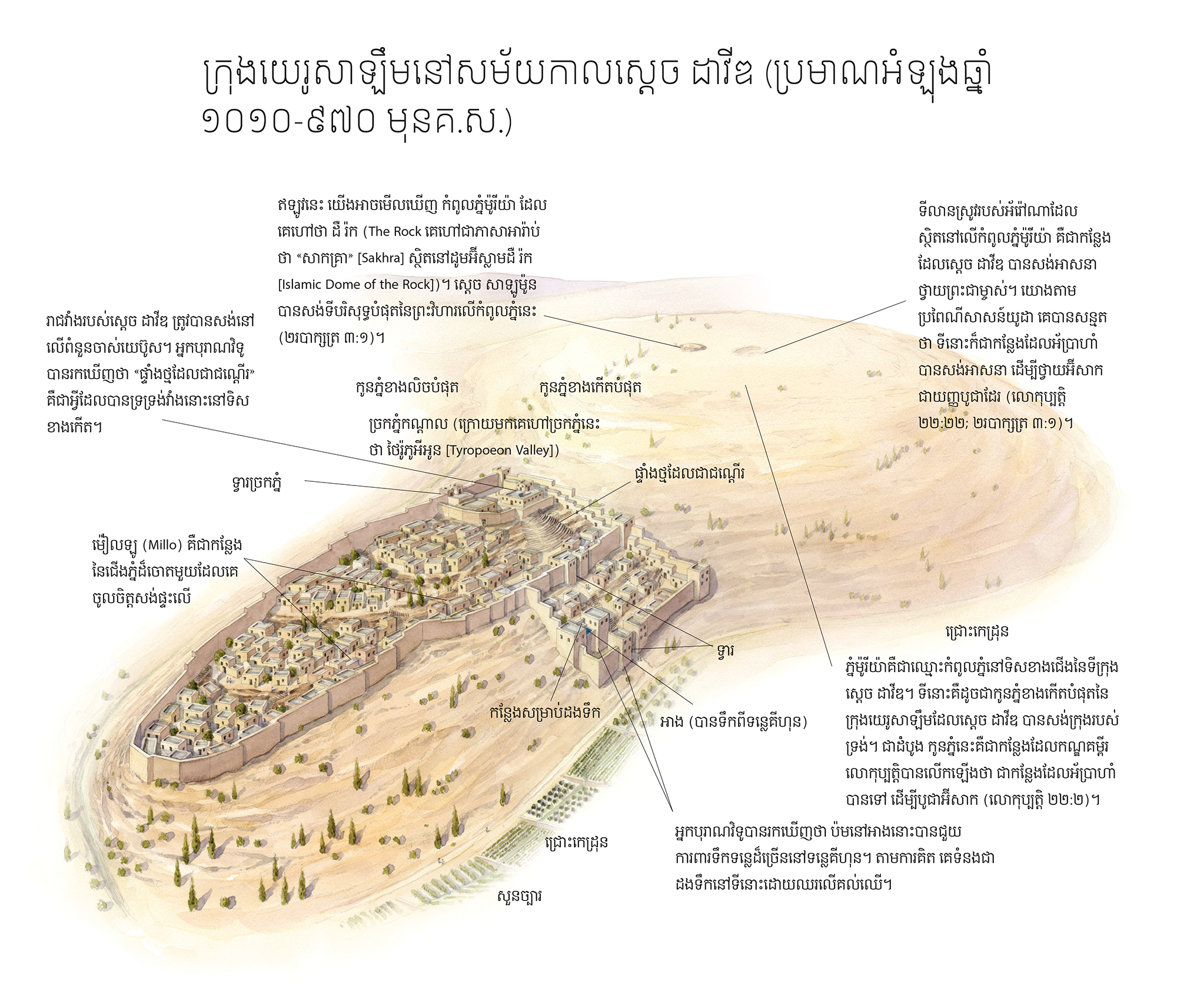
ក្រុងយេរូសាឡឹមនៅសម័យកាលស្ដេច ដាវីឌ
Jerusalem in the Time of David
ការពិពណ៌នា
ប្រមាណអំឡុងឆ្នាំ ១០១០-៩៧០ មុនគ.ស.។ ទីលានស្រូវរបស់អ័រ៉ៅណាដែលស្ថិតនៅលើកំពូលភ្នំម៉ូរីយ៉ា គឺជាកន្លែងដែលស្ដេច ដាវីឌ បានសង់អាសនាថ្វាយព្រះជាម្ចាស់។ យោងតាមប្រពៃណីសាសន៍យូដា គេបានសន្មតថាទីនោះក៏ជាកន្លែងដែលអ័ប្រាហាំបានសង់អាសនា ដើម្បីថ្វាយអ៊ីសាកជាយញ្ញបូជាដែរ (លោកុប្បត្តិ ២២:២; ២របាក្សត្រ ៣:១)។ ឥឡូវនេះ យើងអាចមើលឃើញ កំពូលភ្នំម៉ូរីយ៉ា ដែលគេហៅថា ដឺ រ៉ក (The Rock គេហៅជាភាសាអារ៉ាប់ថា «សាកគ្រា» [Sakhra]) ស្ថិតនៅដូមអ៊ីស្លាមដឺ រ៉ក [Islamic Dome of the Rock]។ ស្ដេច សាឡូម៉ូនបានសង់ទីបរិសុទ្ធបំផុតនៃព្រះវិហារលើកំពូលភ្នំនេះ (២របាក្សត្រ ៣:១)។ រាជវាំងរបស់ស្ដេច ដាវីឌ ត្រូវបានសង់នៅលើពំនួនចាស់យេប៊ូស។ អ្នកបុរាណវិទូបានរកឃើញថា «ផ្ទាំងថ្មដែលជាជណ្ដើរ» គឺជាអ្វីដែលបានទ្រទ្រង់វាំងនោះនៅទិសខាងកើត។ មីឡូរ (Millo) គឺជាកន្លែងនៃជើងភ្នំដ៏ចោតមួយដែលគេចូលចិត្តសង់ផ្ទះលើ។ អ្នកបុរាណវិទូបានរកឃើញថា ប៉មនៅអាងនោះបានជួយការពារទឹកទន្លេដ៏ច្រើននៅទន្លេគីហុន។
Description
c. 1010–970 B.C. Araunah’s threshing floor, located on the top of Mount Moriah, was the place where David built an altar to God. According to Jewish tradition, it is the same place where Abraham built an altar to sacrifice his son Isaac (see Gen. 22:2; 2 Chron. 3:1). The top of Mount Moriah, called The Rock (Arabic “Sakhra”), is now visible inside the Islamic Dome of the Rock. King Solomon built the Most Holy Place (or Holy of Holies) of the temple on this rock (2 Chron. 3:1). David’s Palace was built on the ruins of the Jebusite Citadel; the excavated “Stepped Stone Structure” supported this building on the east. The Millo was a terraced construction on a steep slope, on which houses were built. The excavated Spring and Pool Towers protected the abundant water supply of the Gihon Spring.